

Do I Have To Clean Out Containers Before Recycling
Once a fortnight nosotros diligently bicycle our recycling bin to the kerb and and then probably give ourselves a pat on the back while thinking of all the useful products we accept helped to create, and the resources and energy we have saved.
Yet it pays to call back a bit more deeply virtually what is going into each bin. Audits of kerbside collections have shown that around 10% (by book) of the material placed in kerbside recycling bins shouldn't be there. The most mutual "contamination" items include plastic bags (both full and empty), textiles, dark-green waste, polystyrene (styrofoam) and full general rubbish.
The problem cuts the other style too. Around a third of landfill waste matter bins routinely contain recyclables or green waste material.
How many of us actually know where the contents of our recycling bin get, who manages information technology, and how the various materials are separated? This knowledge is a crucial chemical element in reducing contamination and improving our recycling industry.
Bin information
A 2005 report plant that 48% of Australians are dislocated nearly what tin can and cannot be recycled, not least because the rules and practices differ betwixt local governments and commercial operators, and between households and workplaces.
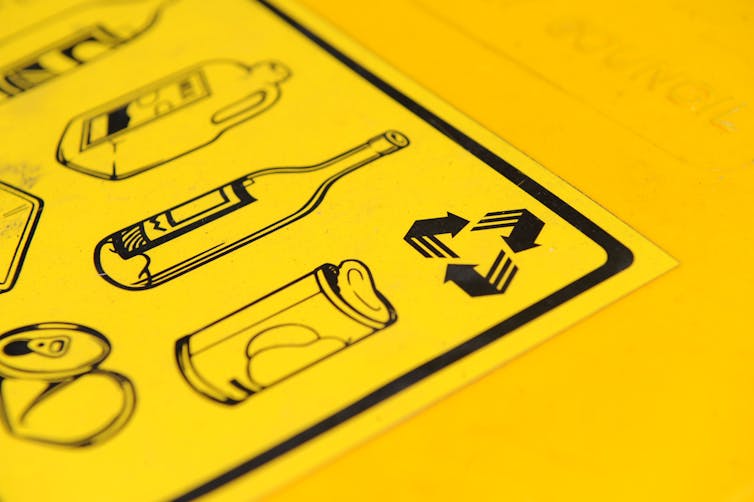
For household recycling, we generally receive an annual flyer from the council telling the states what should and shouldn't go in the recycling bin. But there is typically niggling or no feedback on whether we're getting it right.
By way of example, ask yourself (and your friends) how much time you spend rinsing out tins, yoghurt pots and other food containers before throwing them in the recycling.
The truth is that y'all don't have to exercise this at all, because today's recycling systems can easily cope with the levels of food oft found in or on these containers. Yet many householders withal do information technology, either because they were never told information technology was unnecessary, or considering they were given the information but didn't read it. Meanwhile, we waste product h2o, energy and time rinsing our recycling.
Where'due south the info?
A recent confidential report compiled for four regional councils in Victoria found that only 29% of householders had ever looked at a quango website for information about recycling. Most respondents said they got their information from schools, local newspapers and bin stickers.
It is important to have articulate information from the right source about which items tin can and tin't be recycled. One case is plastic shopping bags, which many supermarkets urge their customers to recycle by placing them in dedicated bins on the store premises. But this might prompt shoppers to think that plastic bags tin be recycled in their kerbside collection as well, which is typically non the instance. And, every bit we saw higher up, relatively few householders check their local council's website for the right information.
Plastic bags are merely one of the common contaminants in the recycling stream that result in large volumes of recyclables being rejected and disposed of in landfill. This comes at a toll to the council, and therefore to usa.
Many items can exist recycled, given the right equipment. To persist with the plastic purse case, these crave a automobile that can dissever them from the rest of the waste material stream.
But this doesn't work for full plastic bags, regardless of whether they incorporate rubbish or other recyclables. Full bags go straight to landfill because information technology is too laborious to empty them. And in some cases (such as when they contain nappies) doing and then would pose a health gamble for workers at the recycling facility.
A little consumer knowledge goes a long way – both in improving the efficiency of our recycling systems and in increasing the motivation of householders who know they're helping to make life easier for those who process their recycling.
Disposables vs reusables
We must also accept a good retrieve, non simply nearly the items we put in the recycling, only most which products we choose to use in the first place. Although we are bombarded with letters most reducing our use of dispensable items, in some cases dispensable is really better.

One study found that a ceramic loving cup would need to be used at least 39 times to be a better option than paper disposable cups, and 1,006 times when compared with a styrofoam i. A plastic reusable cup would need to be washed at to the lowest degree 17 times to be more sustainable than newspaper disposable ones, and 450 times when compared with styrofoam.
So if y'all're prone to losing or breaking things (or just collecting too many reusable cups!), and so it might be wise to consider going disposable (or being more careful).
Then comes the event of whether and how these disposable cups tin be recycled. Most outlets now utilise paper rather than styrofoam cups. While the plastic lid tin exist recycled, in most instances the cup cannot as there is a film of a plastic waterproof fabric inside it.
A good plan is to inquire whether your favourite café stocks cups that tin can exist recycled. If and then, encourage them to put upward a sign (if they haven't already) indicating that they use fully recyclable cups, to avoid confusion.
The key to all of this is cognition and balance – that is, after all, what sustainability is all about.

Source: https://theconversation.com/why-youre-almost-certainly-wasting-time-rinsing-your-recycling-78189
Posted by: spencerwiliat.blogspot.com
0 Response to "Do I Have To Clean Out Containers Before Recycling"
Post a Comment